CROOKED AXIS
Clément Bedel, Lilla Gombos, Beata Hechtová, Botond Keresztesi, Andrea Luzi, Kanrec Sakul, Boris Sirka, Erik Šille
Curated by Niki Bernath
13.11. - 13.12. 2025 VUNU Bratislava
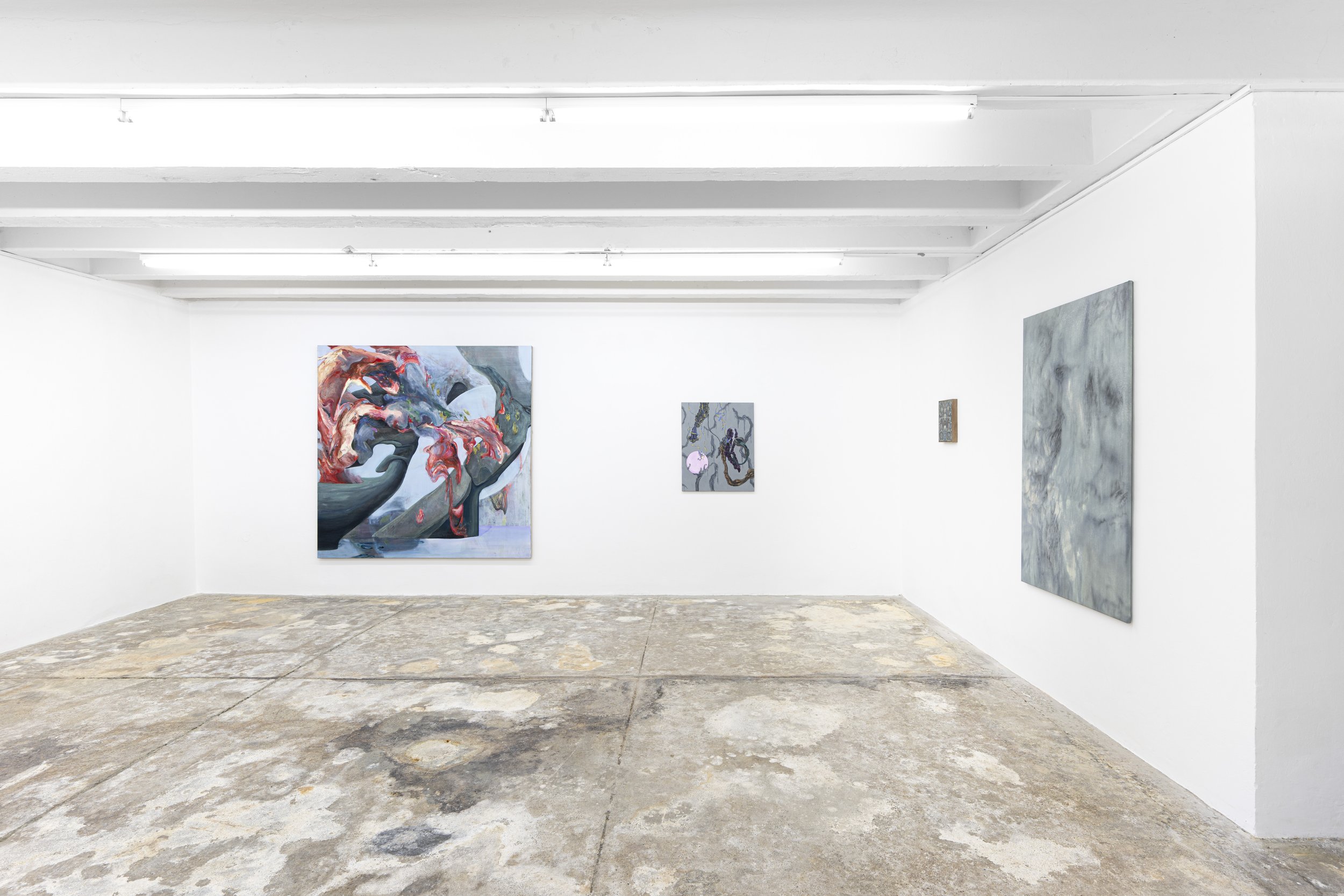
The exhibition brings together works by Clément Bedel, Lilla Gombos, Beata Hechtová, Botond Keresztesi, Andrea Luzi, Kanrec Sakul, Boris Sirka, and Erik Šille, featuring both gallery artists and artists presented by VUNU for the first time.
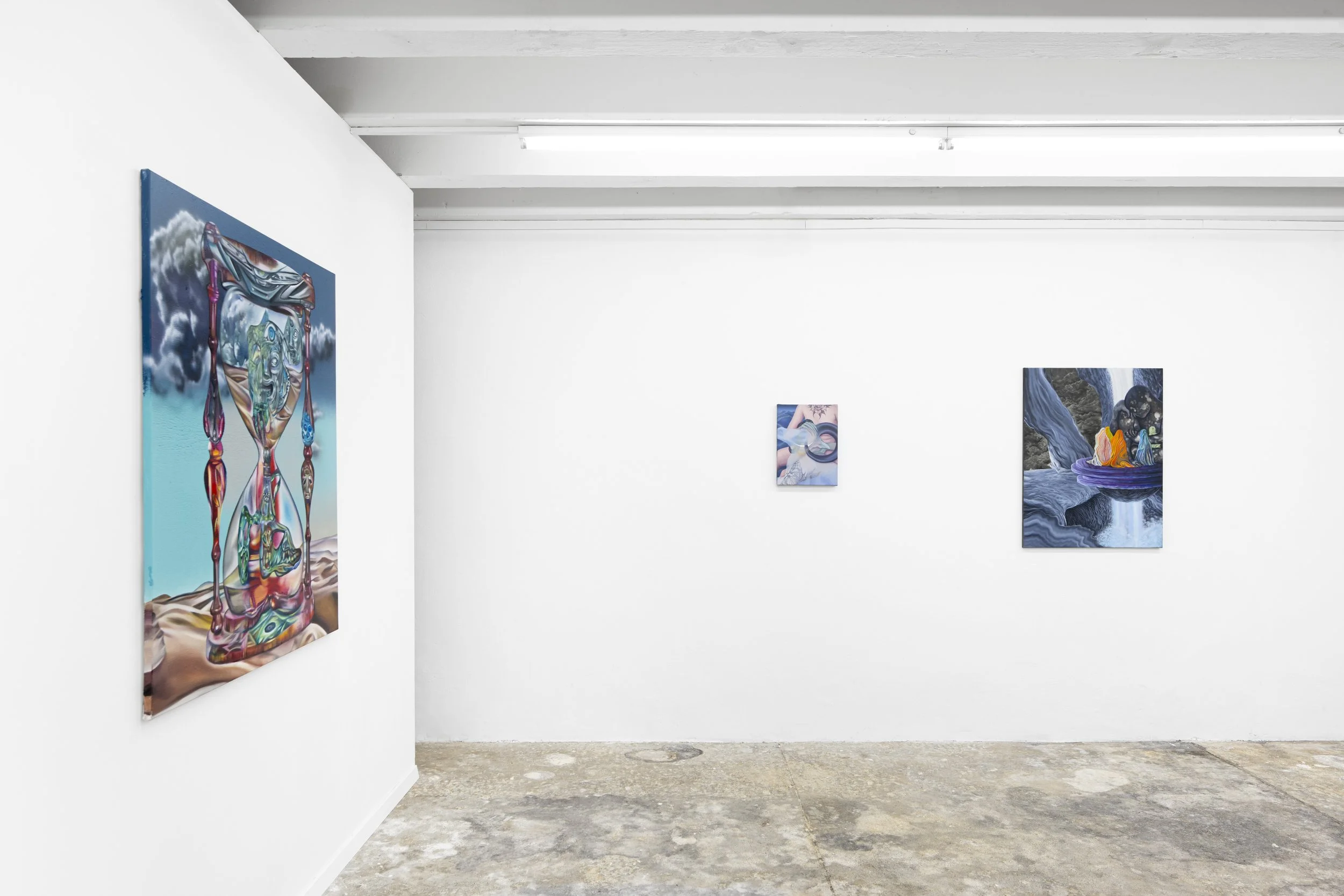
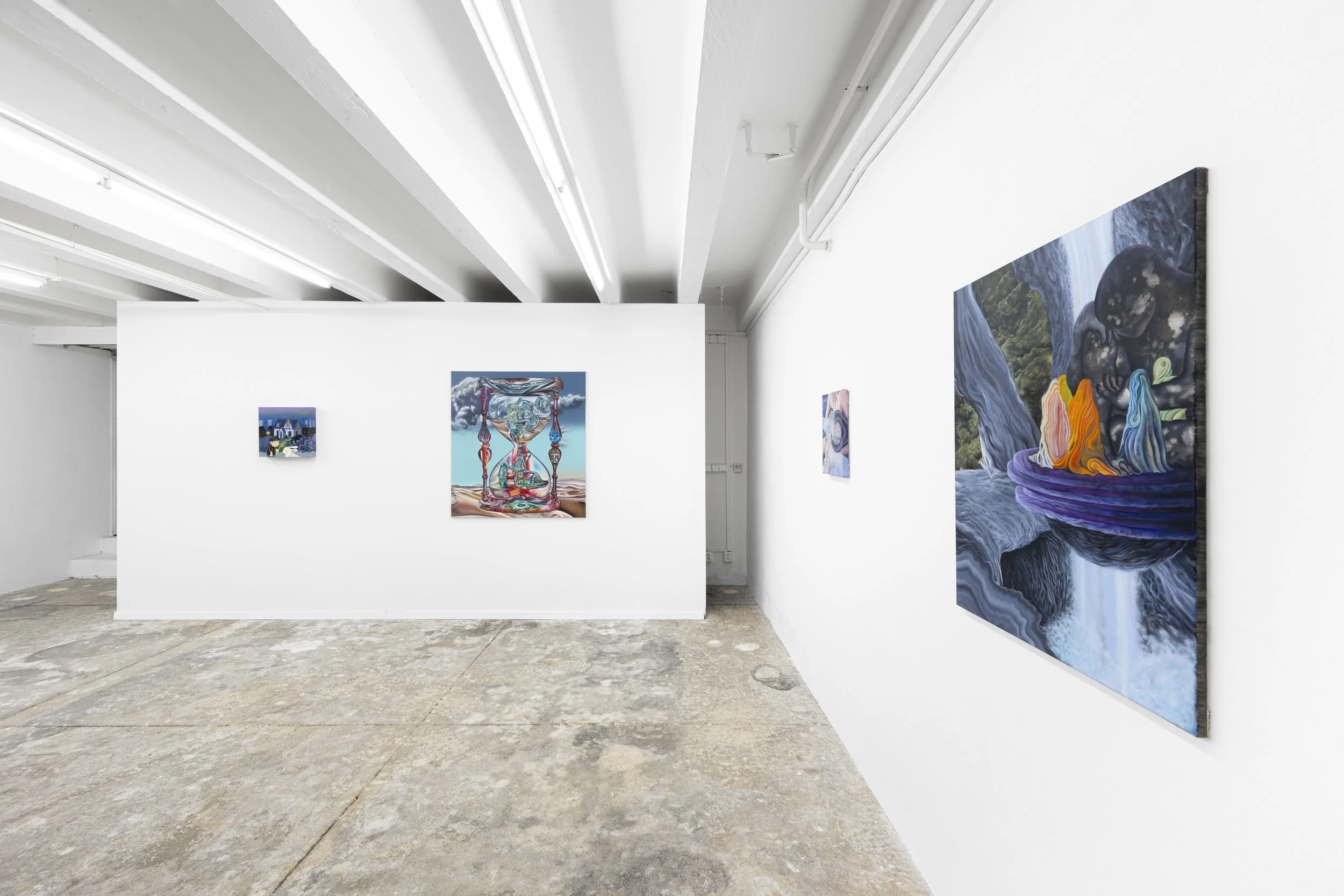
Turn backwards in a cinema, past the audience, towards the projection booth. There, escaping through glass, a second image appears. The same image, yet not the same. Shrunken, inverted, crooked. This strange displacement between the original and its double becomes the axis of the exhibition. Eight artists working in this slippage, where every image carries within itself something distorted, mirrored, other.
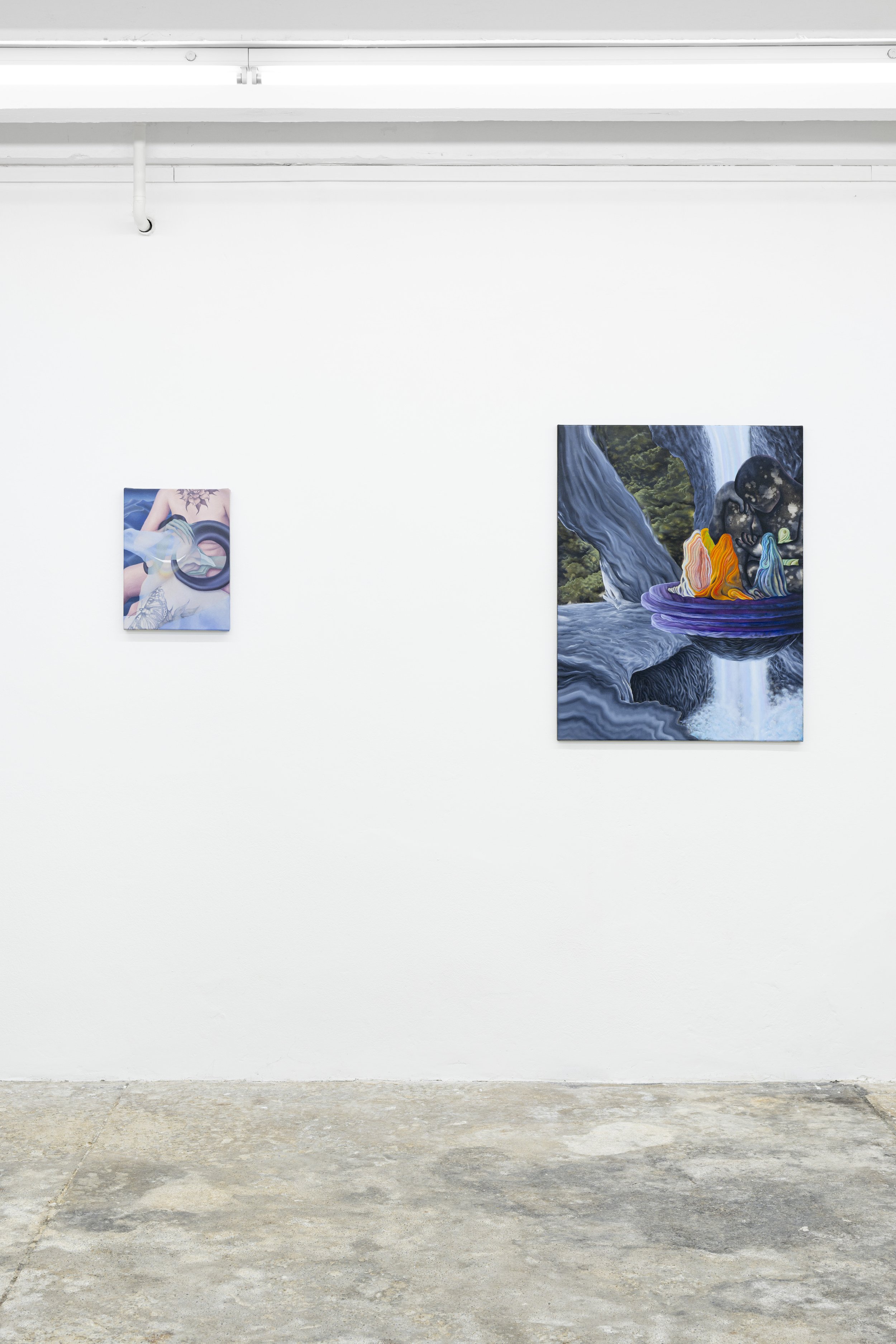
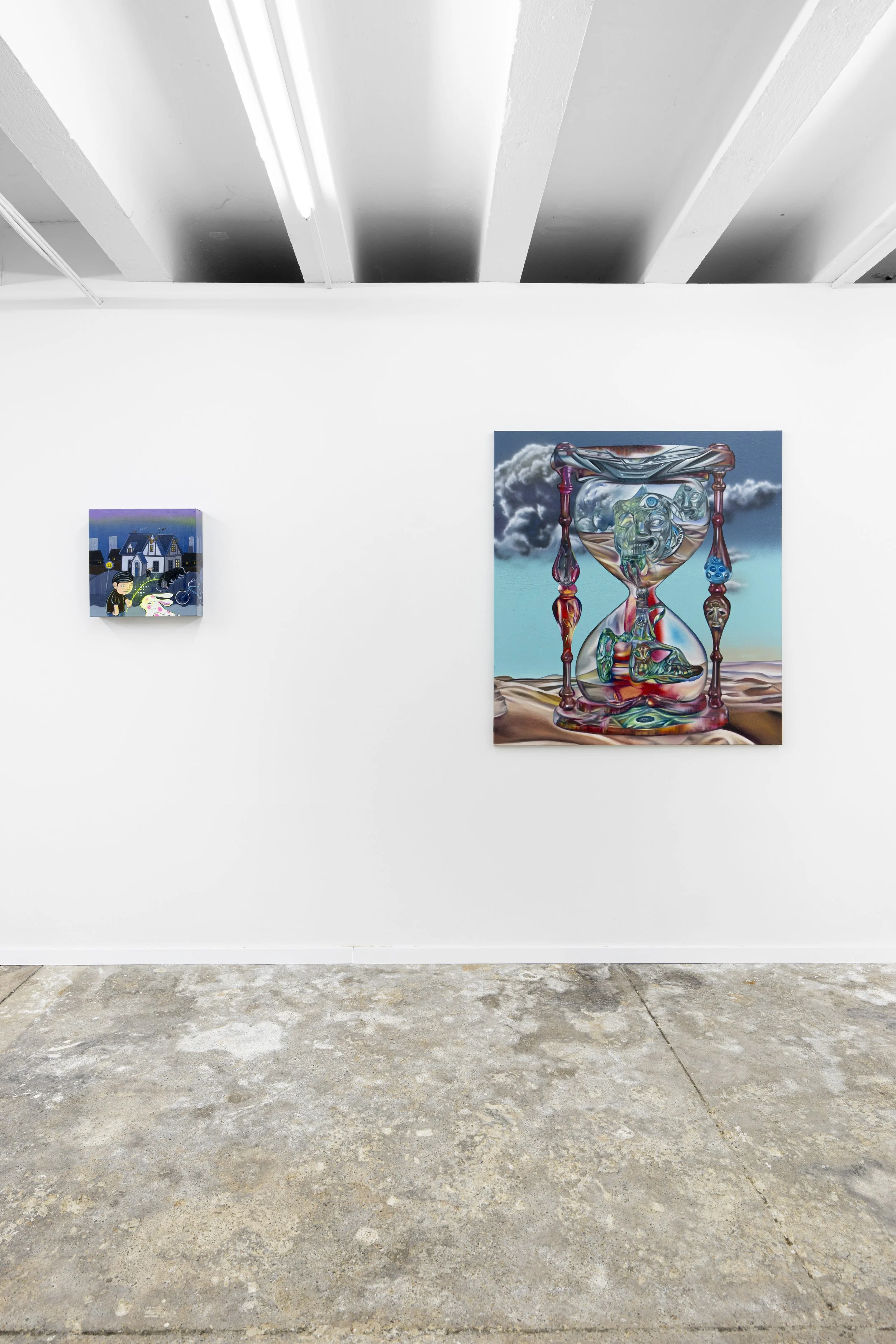
The screen turns ninety degrees: from cinema’s Y axis (front/back) to the gallery wall's X axis (left/right). The same tension of scale, mirroring, and distortion. Two artists occupy a single wall, aligned but dissonant. One larger work, one smaller work. Between them, the double, two views of the same situation. The question surfaces: how every image carries within itself its crooked twin.
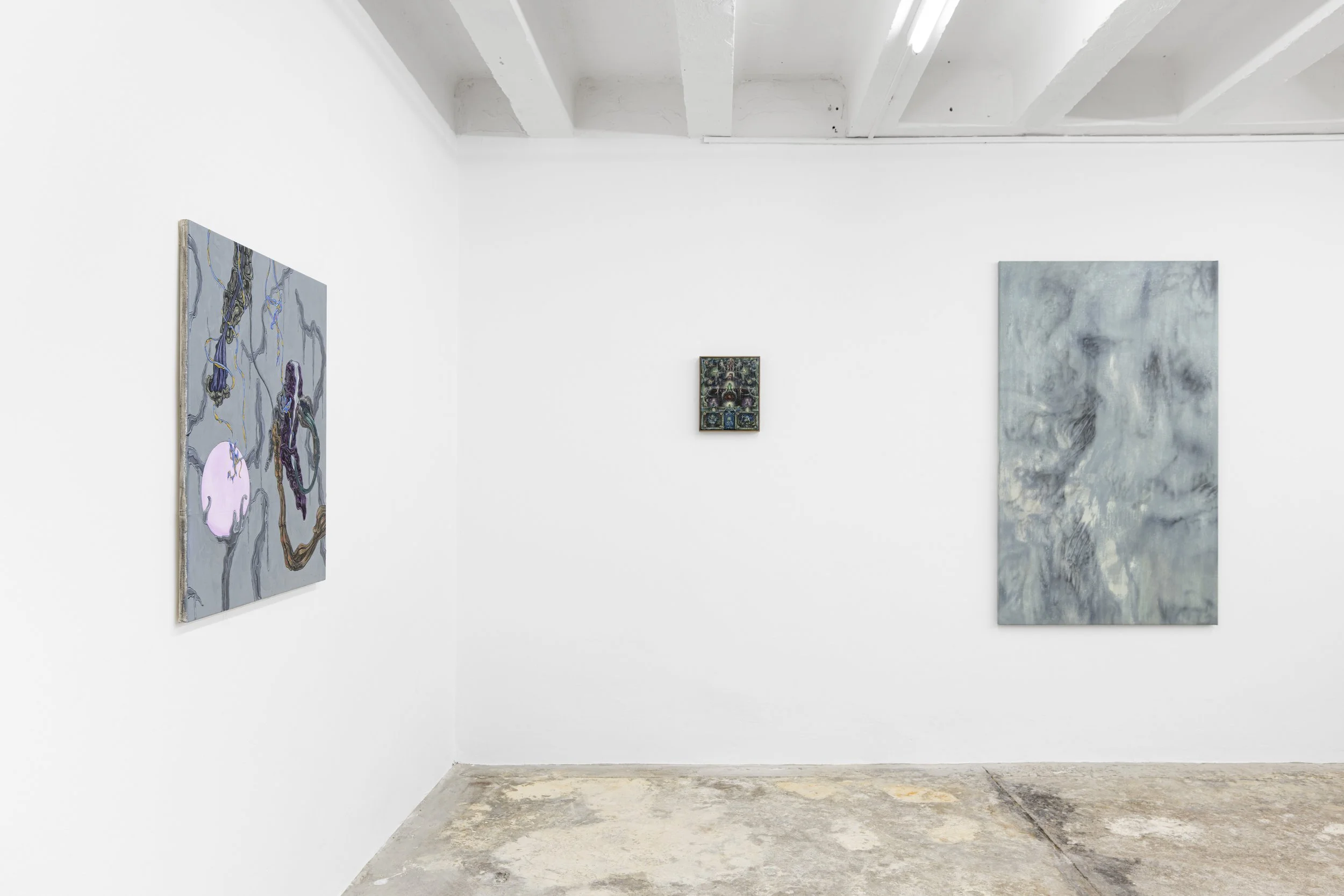
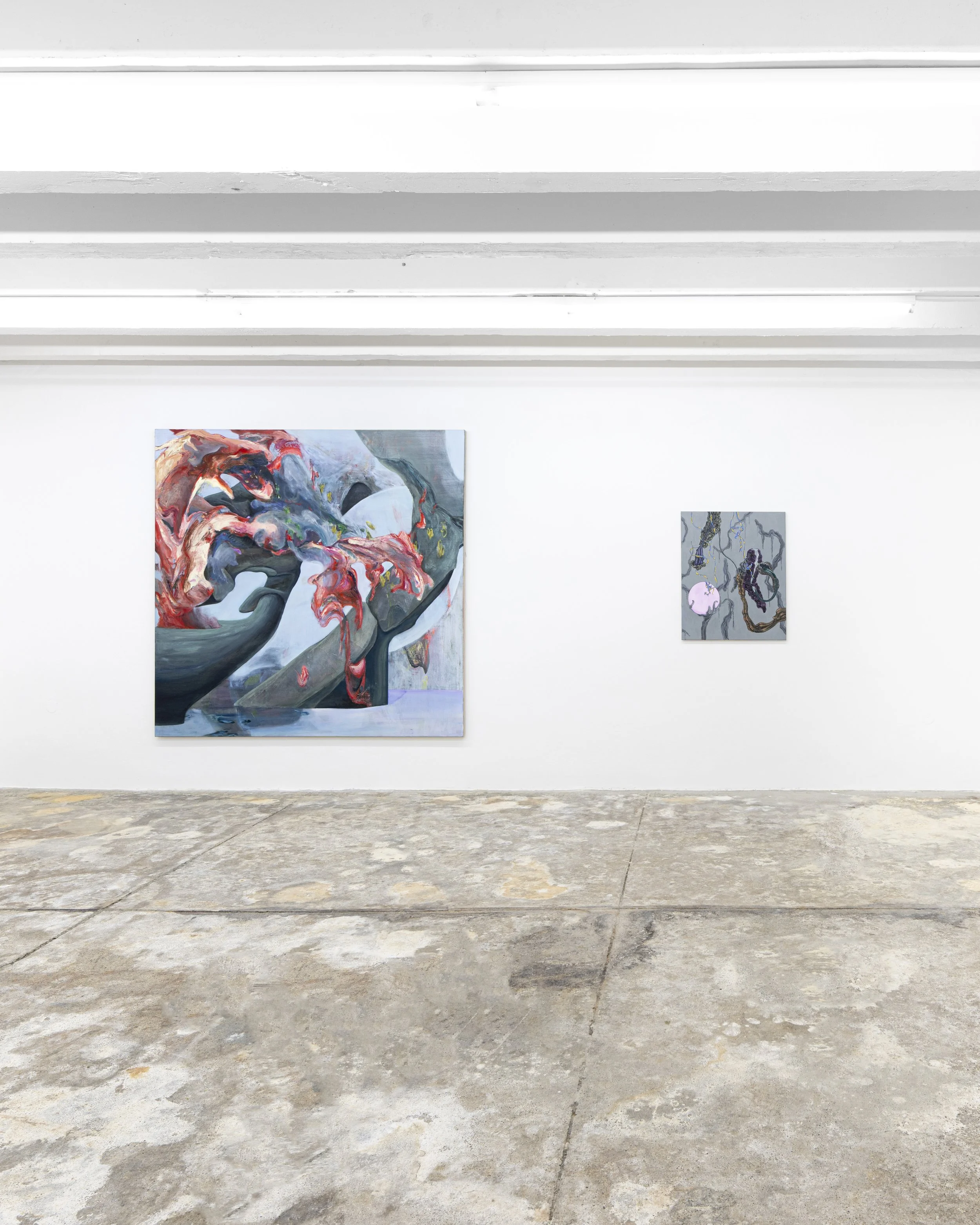
Clément Bedel, Concrete ghosts, 2024
oil on canvas 190 x 190 cm
Clément Bedel
(b. 1993) is a French painter based in Vienna, Austria. He creates hybrid compositions that capture suspended moments between collapse and rebirth. His incisive works, evoke a world in mutation where the resilience of nature defies the idea of extinction. Intense streams of color, symbolizing pollution, merge with plants, trees and brutalist relics in perpetual transformation. Filamentous fungi, algae and cyanobacteria colonize these ghostly landscapes, reinterpreting human ruins as emerging ecosystems.
Clément Bedel, Metabolism of ghosts 1/6, 2022
oil on canvas 27 x 20 cmClément Bedel, Resilience, 2022
oil on canvas 40 x 40 cm
Kanrec Sakul, Faplumoi, 2025
oil on canvas 80 x 65 cm
Kanrec Sakul
(b. 1989) is a Košice-based artist who has long been dedicated to painting, but also to objects and multi-layered site-specific installations. He works with detailed oil paintings, obsessive drawings and raw objects or installations. The artist’s paintings are dominated by a significant interest in experimentation with structures or organic forms. Sakul works purposefully with repetition, geometric shapes or relative perspective, which unfolds in an expressive and absurd color palette.
Kanrec Sakul, Sekasuo, 2025
oil on canvas 80 x 65 cm
By varying and combining glaze and pasty parts, a Fauvist sensibility and use of color, he builds surreal micro worlds dominated by architectural vistas with an unclear function, period and place of their existence.
Andrea Luzi
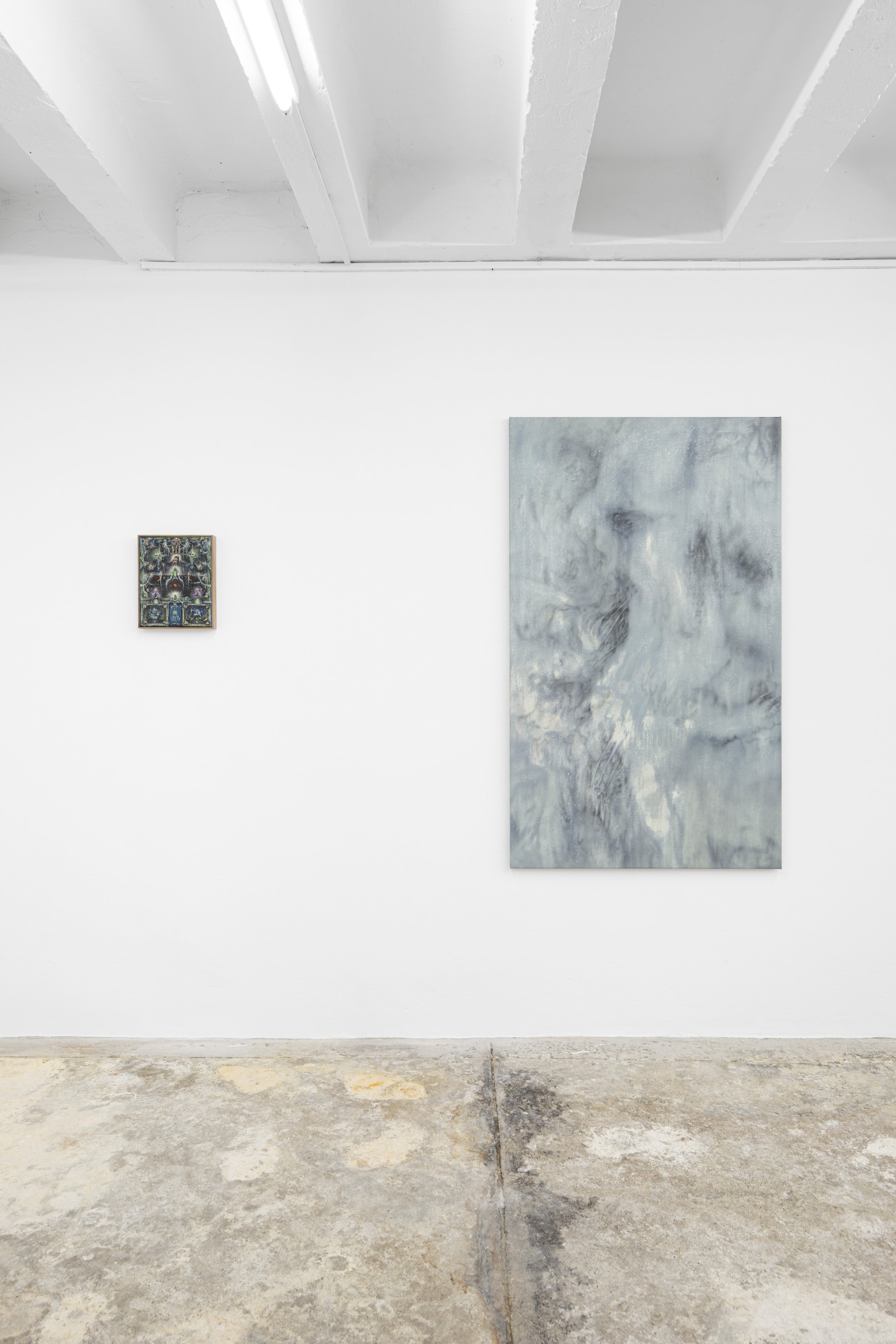
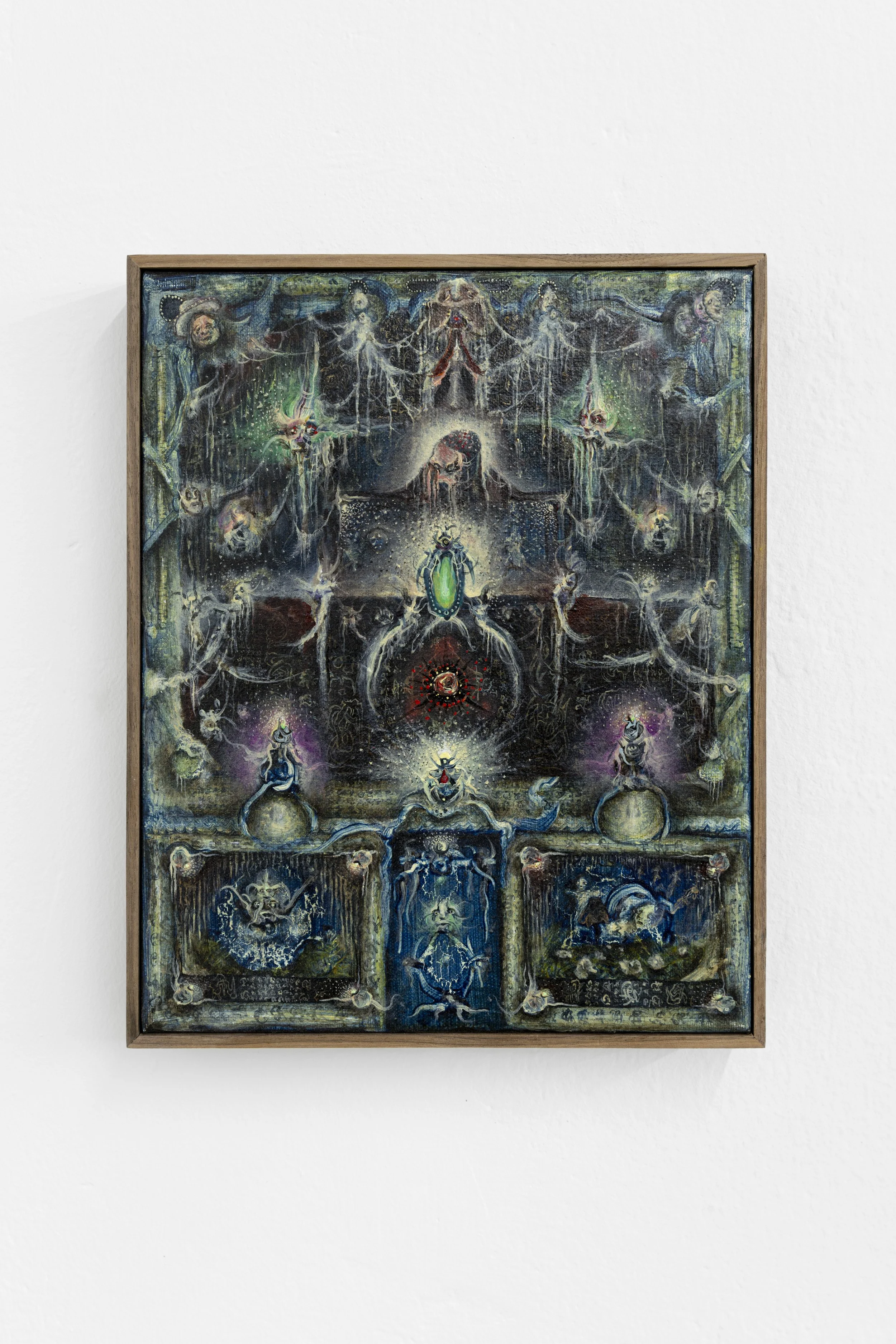
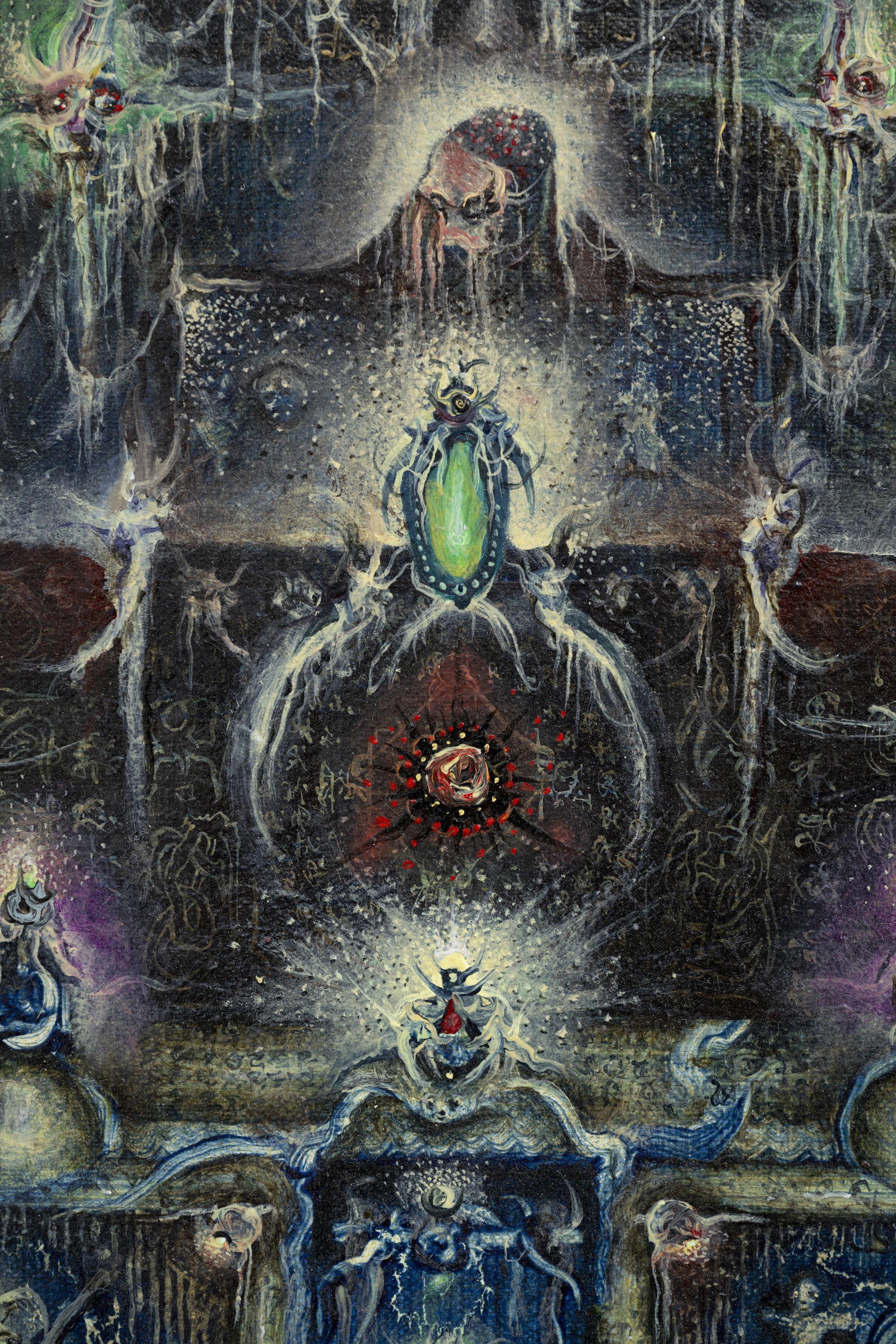
(b. 1997) At the foundation of Andrea Luzi’s artistic practice (lives and works between Milan, Filottrano, and Vienna) pulses a visceral and archaic energy that traverses matter and spirit like an astral élan vital, boundless and timeless. Luzi’s dense painting, whose chromatic palette moves primarily between deep black, intense red, and marbled green, is traversed by veins or beams of vibrant light that emerge in contrast from often tenebrous backgrounds, creating an atmosphere charged with tension and mystery. This stratification arises from a continuous tension between light and shadow, between material energy and meditative reflexivity.
Andrea Luzi, XXIII : XIII, 2025

oil on canvas 30 x 24 cm
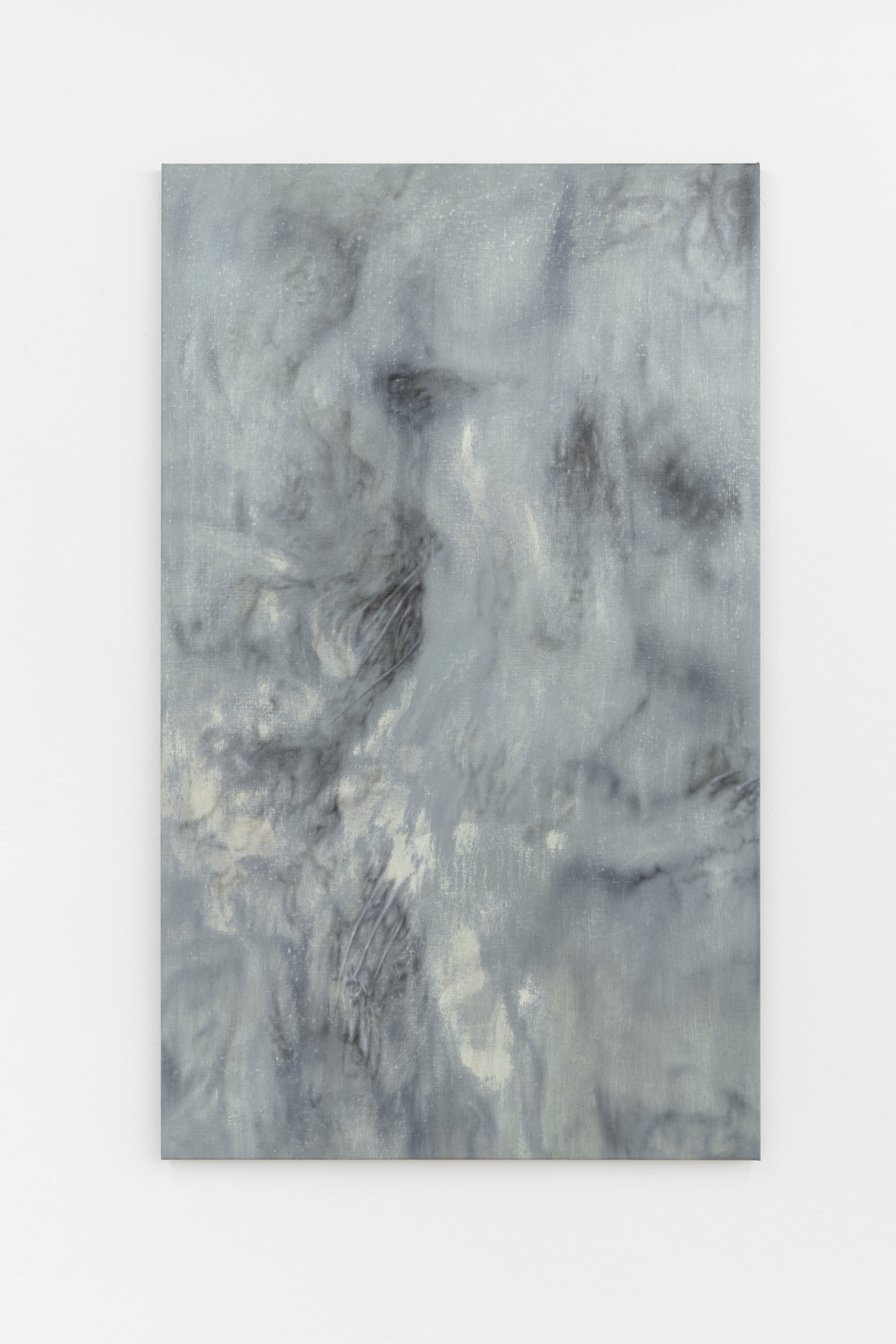
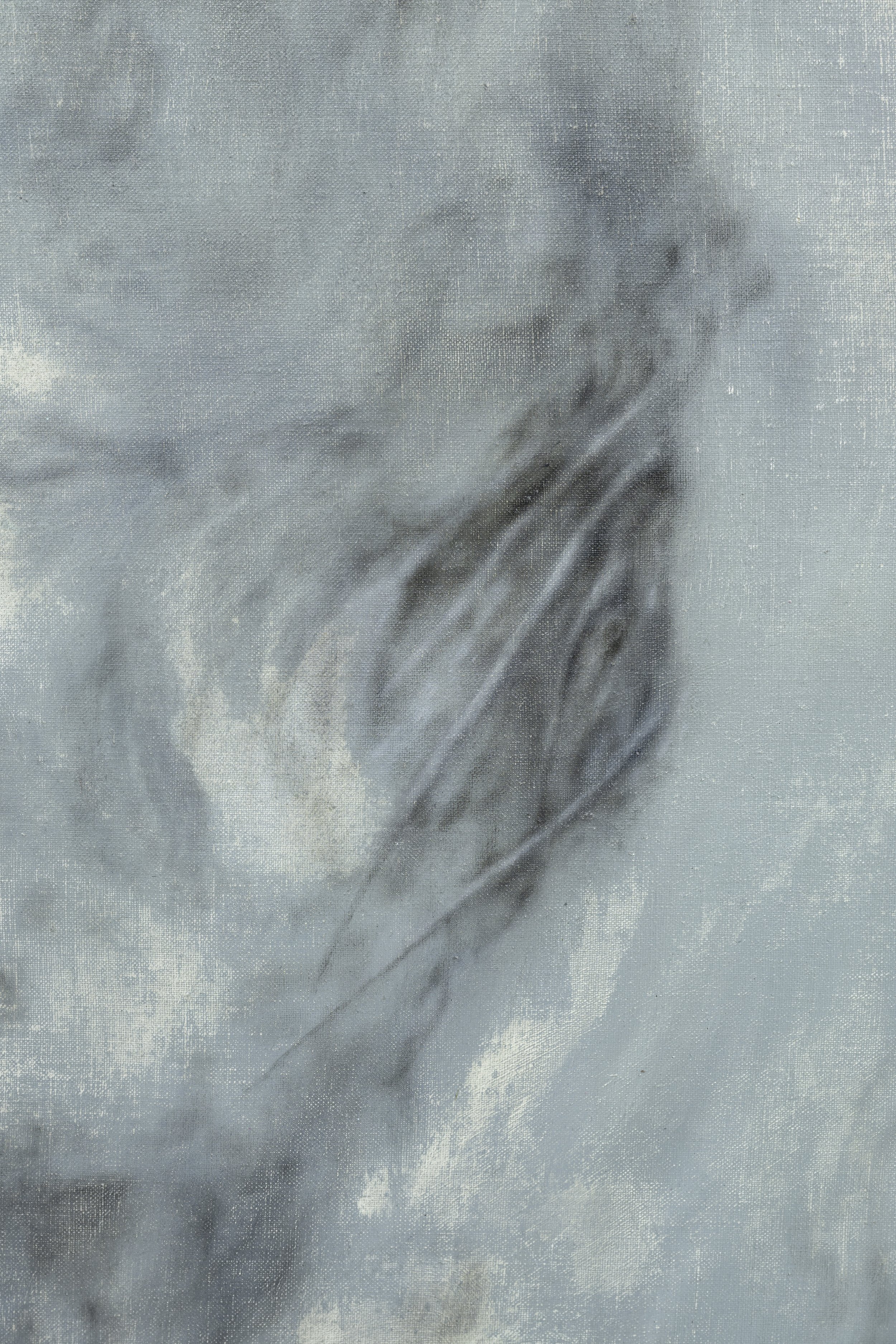
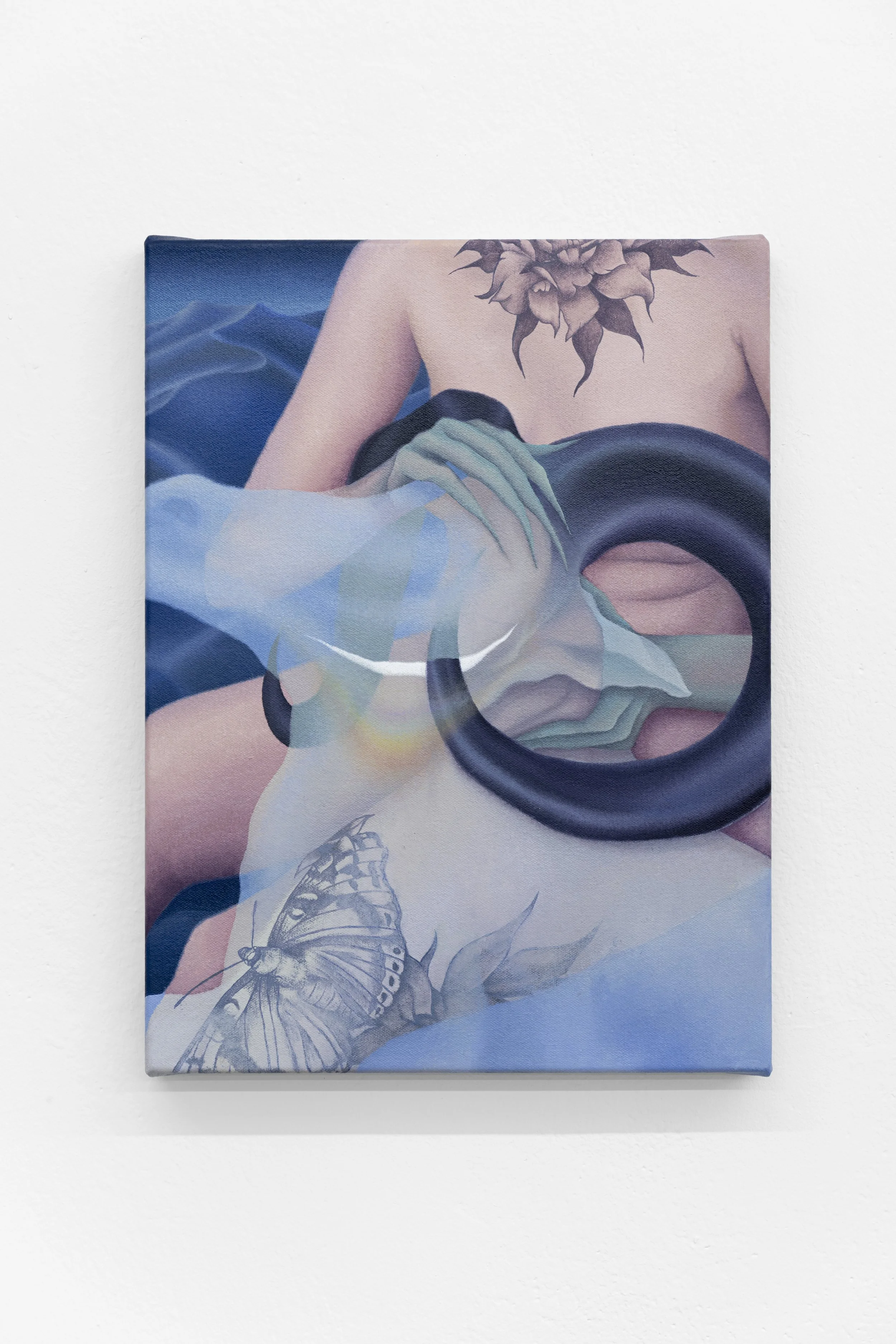
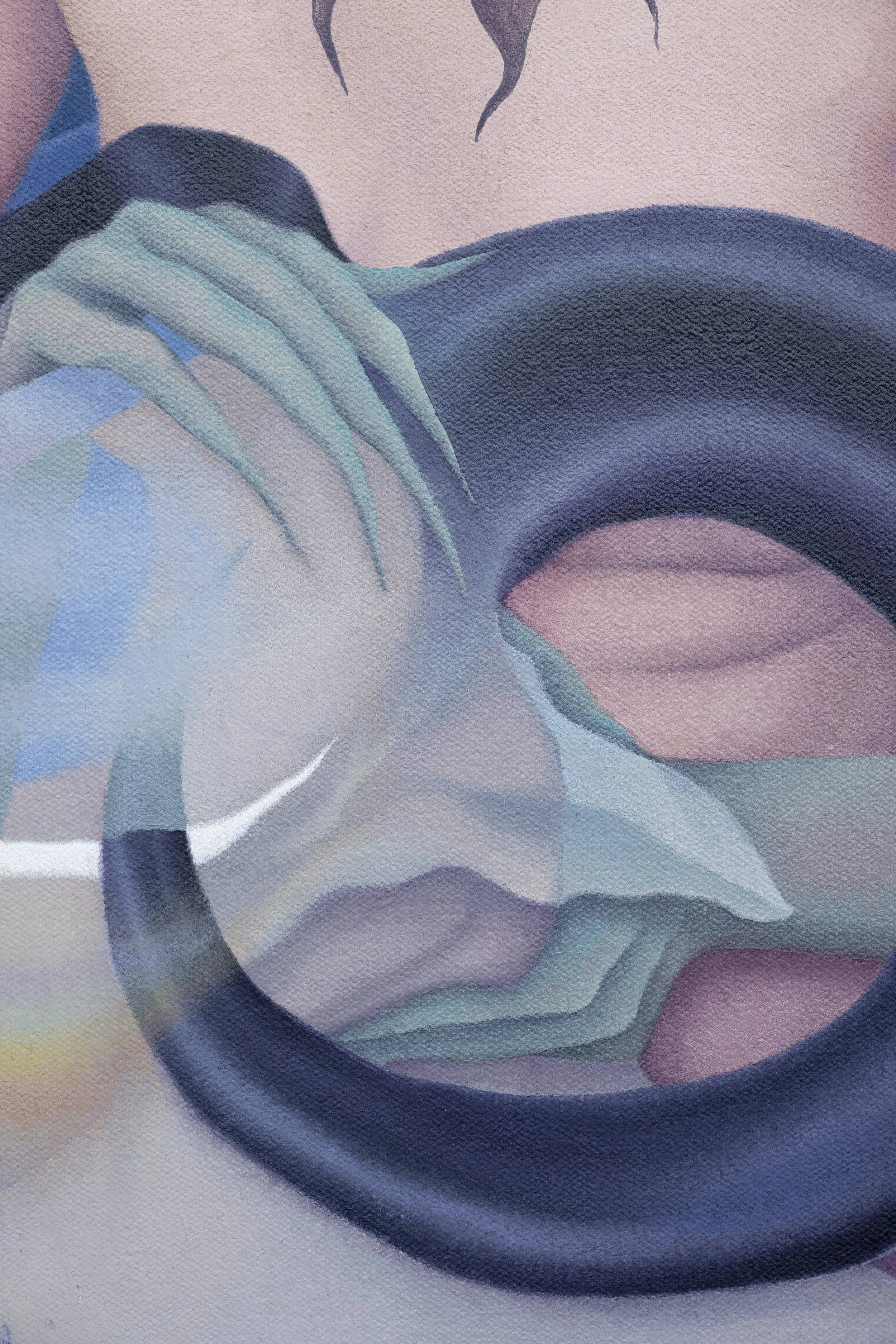
Lilla Gombos, Ghost Claws, 2025
oil on canvas  150 x 90 cmm
Lilla Gombos
(b. 1999) is a Slovak-Hungarian painter based in Bratislava. In her painterly vocabulary, fragments of human and animal bodies, landscapes, and organic forms appear and dissolve, creating dreamlike scenes full of shifting and ambiguous shapes. Her work engages with a speculative tension between abstraction and figuration, foregrounding the structure, materiality, and tactile qualities of the paintings. The color palette evokes both bodily and artificial sensibilities, adding to the subtle sense of transformation that defines her visual language
Erik Šille
(b. 1978) is a Bratislava-based Slovak painter known for his sharp, graphic visual language blending pop culture, digital aesthetics, and symbolic storytelling. His compositions built from cartoon motifs, game-like environments, and bright, flattened color fields appear playful at first glance, yet they carry an undercurrent of unease. Šille reflects on consumerism, ecological anxiety, and the contradictions of contemporary life, turning familiar icons into poetic, sometimes unsettling allegories. Through precise acrylic painting and layered imagery, he constructs hybrid worlds where humor meets critique, and where the surface charm of his characters masks deeper social tensions.
Erik Šille, Niekam ti to hodím, snáď to nájdeš, 2025
acrylic on canvas 40 x 40 cmErik Šille,
Black Melon is Back, 2025
acrylic on canvas diameter 25 cmBotond Keresztesi
(b. 1987) is a Romanian/Hungarian artist. Capturing the chaotic evolution of collective cultural iconography, his work collapses ancient and futuristic timelines, High and Low Art, and the local and global into a single frame. Comparing his works to ‘flea markets’, Keresztesi creates democratic constellations of images within painterly multiverses located outside of traditional space-time. From ancient times to a cyborgian future, there is no hierarchy between cultural icons and everyday items on his canvases; lava lamps, Iphones and details from Hieronymus Bosch and Caravaggio works share body parts with mythical animals, Ancient greek sculptures, sphinxes and surveillance cameras.
Botond Keresztesi, Time is tickin away, 2025
acrylic, airbrush, oil on canvas 120 x 110 cmBotond Keresztesi, Elixir, 2025
oil on canvas 53 x 46 cmm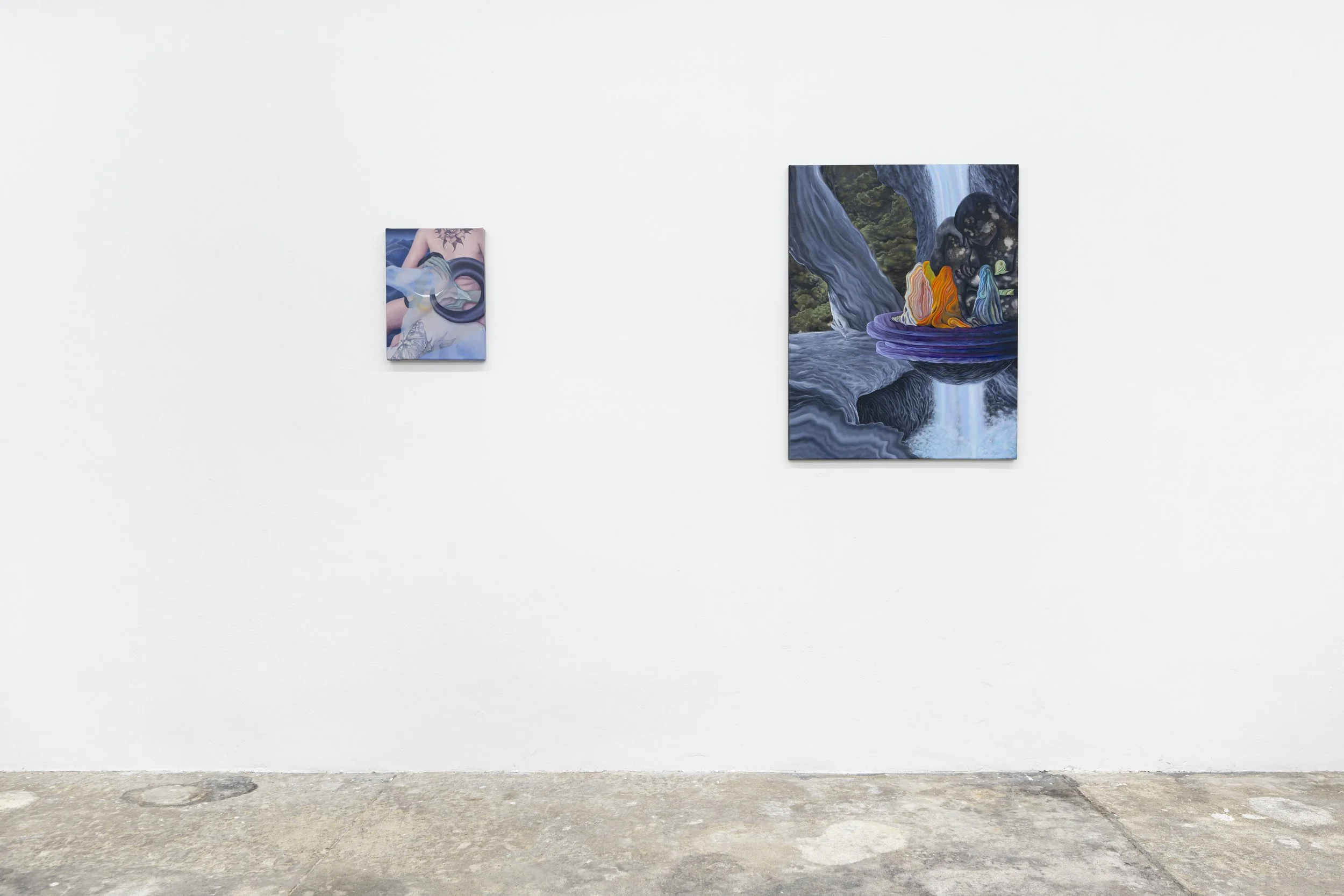
Beata Hechtová, Ram, 2025
oil on canvas 30 x 40 cmBeáta Hechtová
(b. 1991) is a Czech artist based in Vienna. She presents her own vision of a post-apocalyptic world. The beings who survived build a new society, form tribes, connect with nature, and try to understand their surrounding environment. These chosen motifs are called ‘futuristic folklore’. Hechtová’s visual language stems from realistic painting and drawing, updated with striking color reminiscent of holographic reflections. Hints of wild natural scenery interweave with bodies in the compositions, creating the illusion of new and unknown environments. Fluid color transitions, sharp contrasts between cold and warm tones, and surface modeling give the paintings an almost tactile texture.
Boris Sirka, The Messenger, 2025
oil on canvas 90 x 70 cmBoris Sirka
(b. 1981) is a Košice-based artist. At the heart of Sirka’s work lies diversity a wide repertoire of painting approaches, genres, and media. His foundation remains drawing mastery and relentless daily discipline, but he constantly experiments with the possibilities of acrylic and oil painting. Two main themes run through his latest works. The first is the body as a tool of satisfaction, tension, and restlessness a reflection of our hypermodern times, where the constant pursuit of new sensations collides with anxiety and paradoxes of daily life. The second is a more contemplative layer, born after a period of personal struggle and recovery, where figures float in serene, almost timeless spaces.
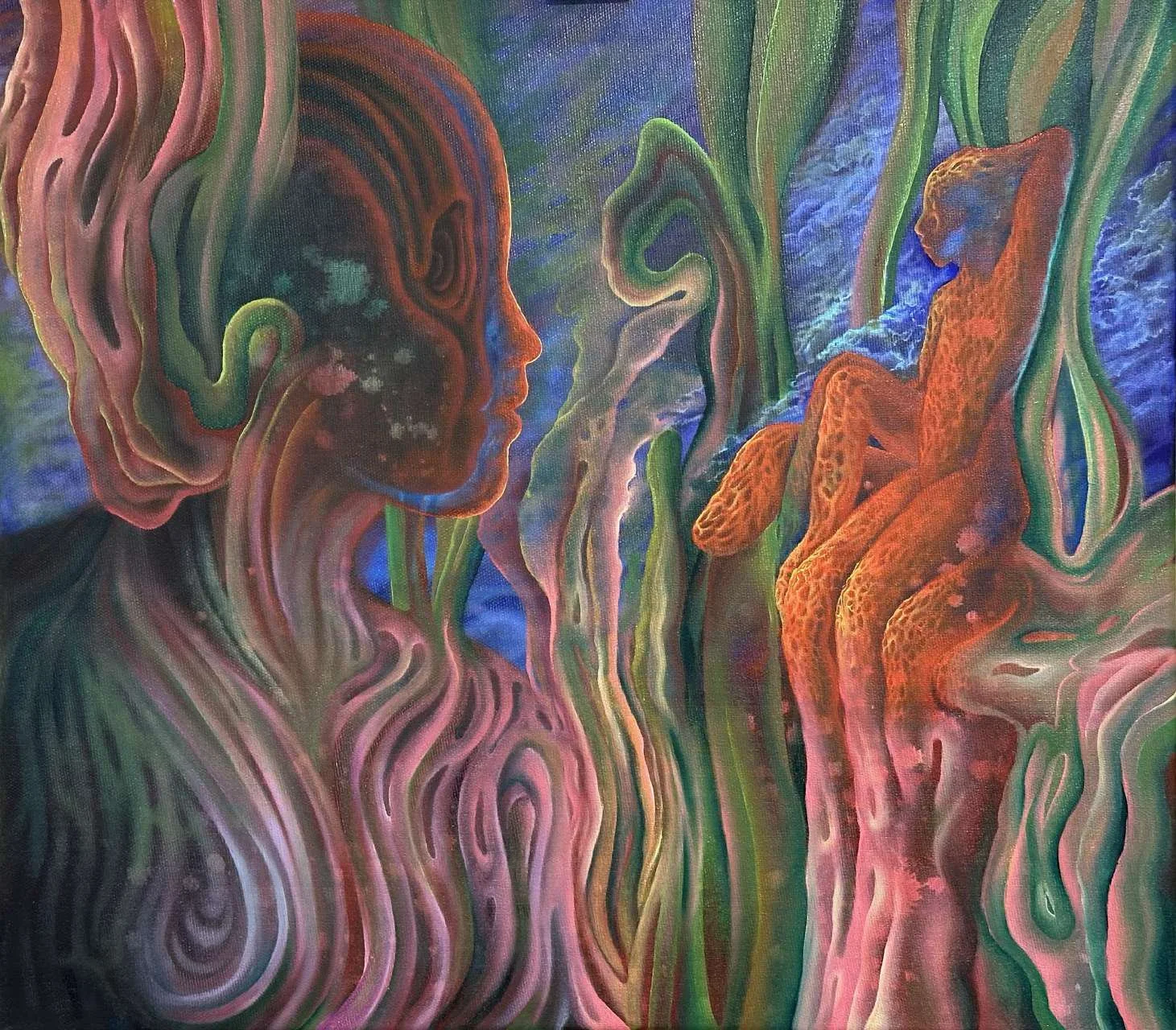
Boris Sirka, Through the Window, 2025
oil on canvas 90 x 90 cmBoris Sirka, I am Way Too High, 2025
oil on canvas 45 x 50 cm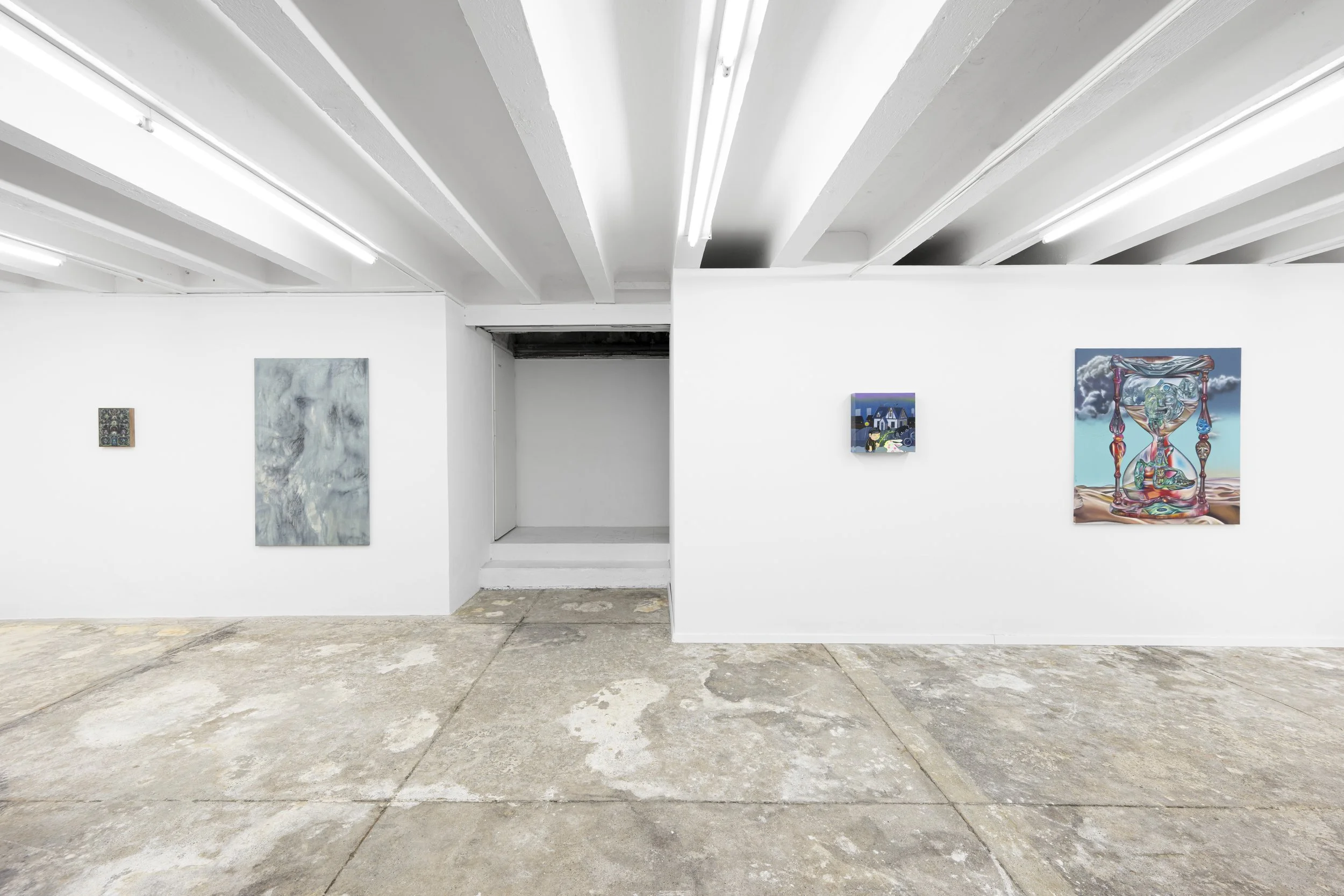
Inquire about available works