TUDOR CIURESCU “ELEGIA”
Opening on March 26, 2026 / 6 PM
27.03. - 09.05.
VUNU Vienna
Exhibition text by Aleksei Borisionok
VUNU gallery is pleased to present the second solo exhibition of Lausanne-based artist Tudor Ciurescu in Vienna.
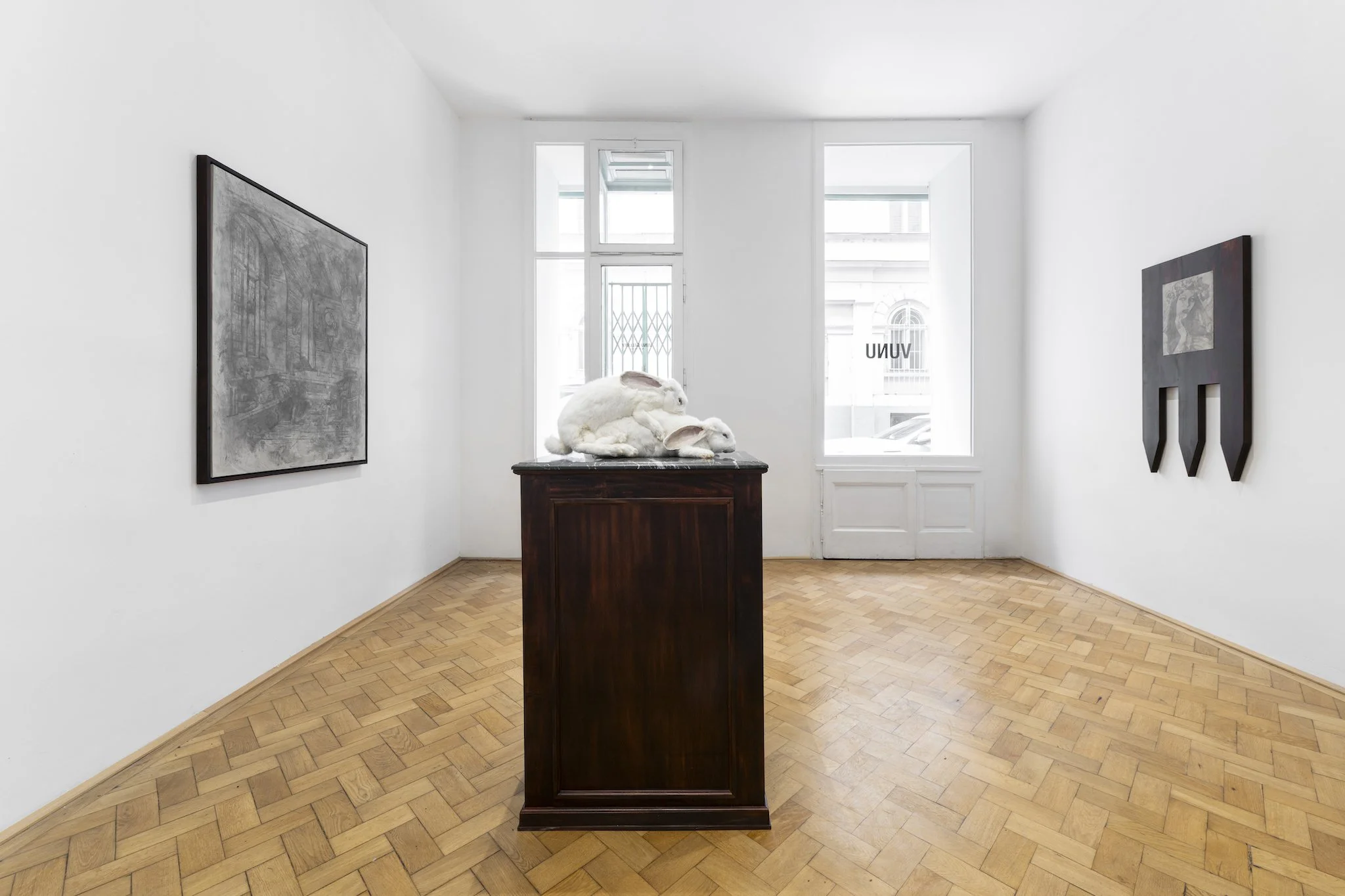
ELEGIA brings together sculptural and pictorial works that trace the visual afterlife of authority: how systems of psychoanalysis, religion, science, and political ideology continue to operate through images long after their claims to certainty have weakened. Developed in dialogue with Vienna’s intellectual and visual history, ELEGIA desacralizes its references. Authority is held at a distance, made visible, rendered vulnerable. An elegy for systems of meaning that outlive belief in them.
TUDOR CIURESCU
(b. 1996, Romania) is a visual artist currently living in Lausanne, Switzerland.
Image and object making stand at the core of his practice. With interest in different narratives such as art history, future paradigms and the collective subconscious. From the intricacies of artificial intelligence to the timeless craft of etching, Ciurescu’s oeuvre transcends traditional boundaries, offering a captivating journey through the evolving language of the younger generation. The academic background in graphics, photography and sculpture is seen in the variety of works and media.
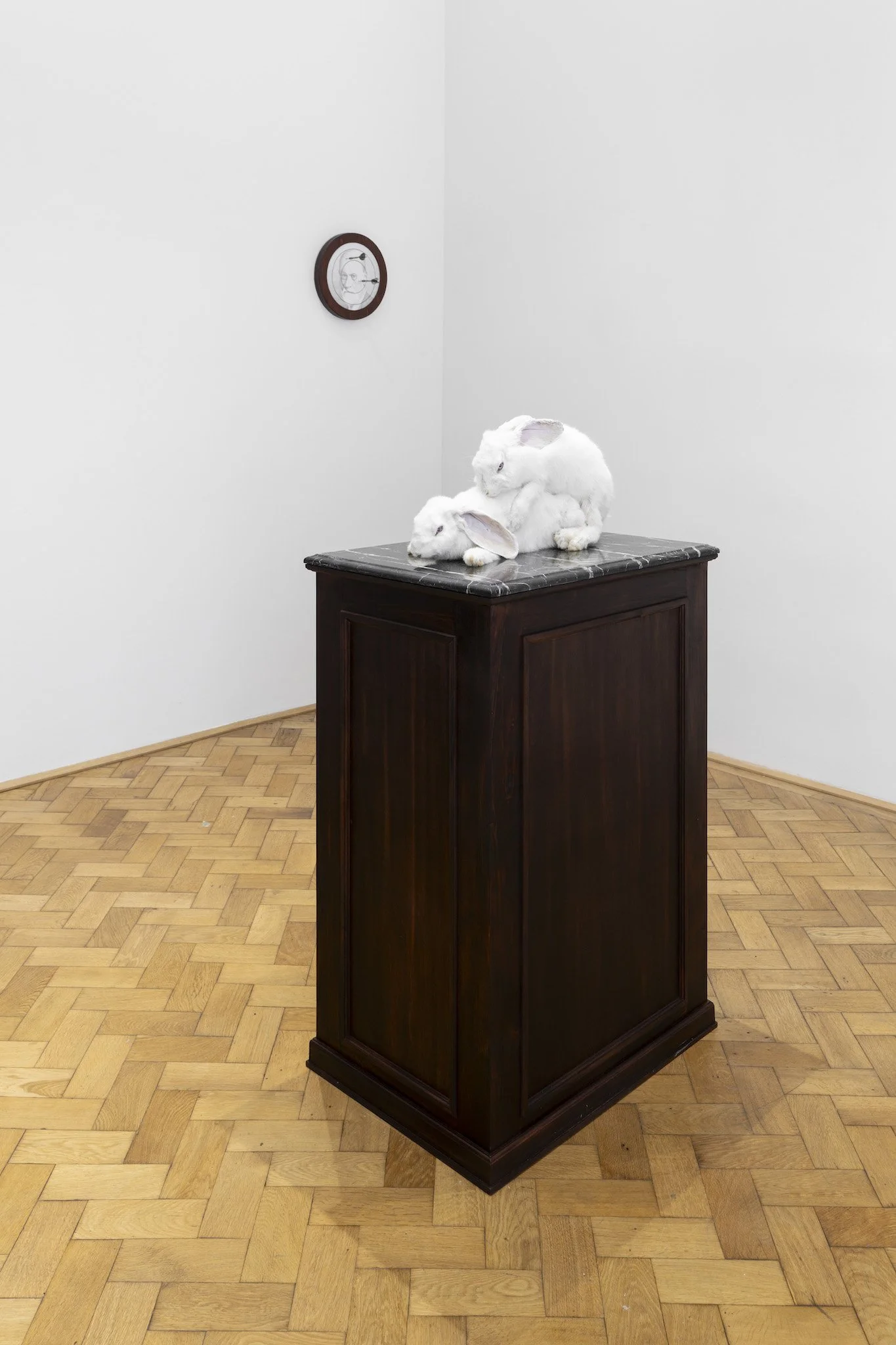
Tudor Ciurscu, S.F. Dartboard, 35 x 35 x 4 cm

wood, charcoal on paper,
925 silver plated metal, 2026In W.R.: Mysteries of the Organism (1971), director Dušan Makavejev explores the entanglement of sexuality and politics through a charged domestic scene. During a debate on love and emancipation, a drunken worker crashes through a wall bearing the image of Wilhelm Reich, whose theories frame the film. Reich understood sexual energy as a revolutionary force, arguing that its repression forms a kind of “body armor” that enables authoritarian systems such as fascism and Stalinism. Positioned between utopian optimism and disillusionment, the film’s montage moves across key tensions of modernity—Soviet repression, Western commodification, and Yugoslav aspirations for a “third way.” Alongside Reich, Sigmund Freud appears as a recurring, destabilized figure, symbolically reduced to a dartboard.
These images and ideas resonate in Tudor Ciurescu’s practice, where fragments of Reichian thought intersect with the chaotic visual language of the internet. Drawing on visceral, “cursed” imagery, Ciurescu reflects on how desire, sexuality, and the death drive are flattened and recirculated in contemporary culture, merging revolutionary politics with New Age sensibilities.
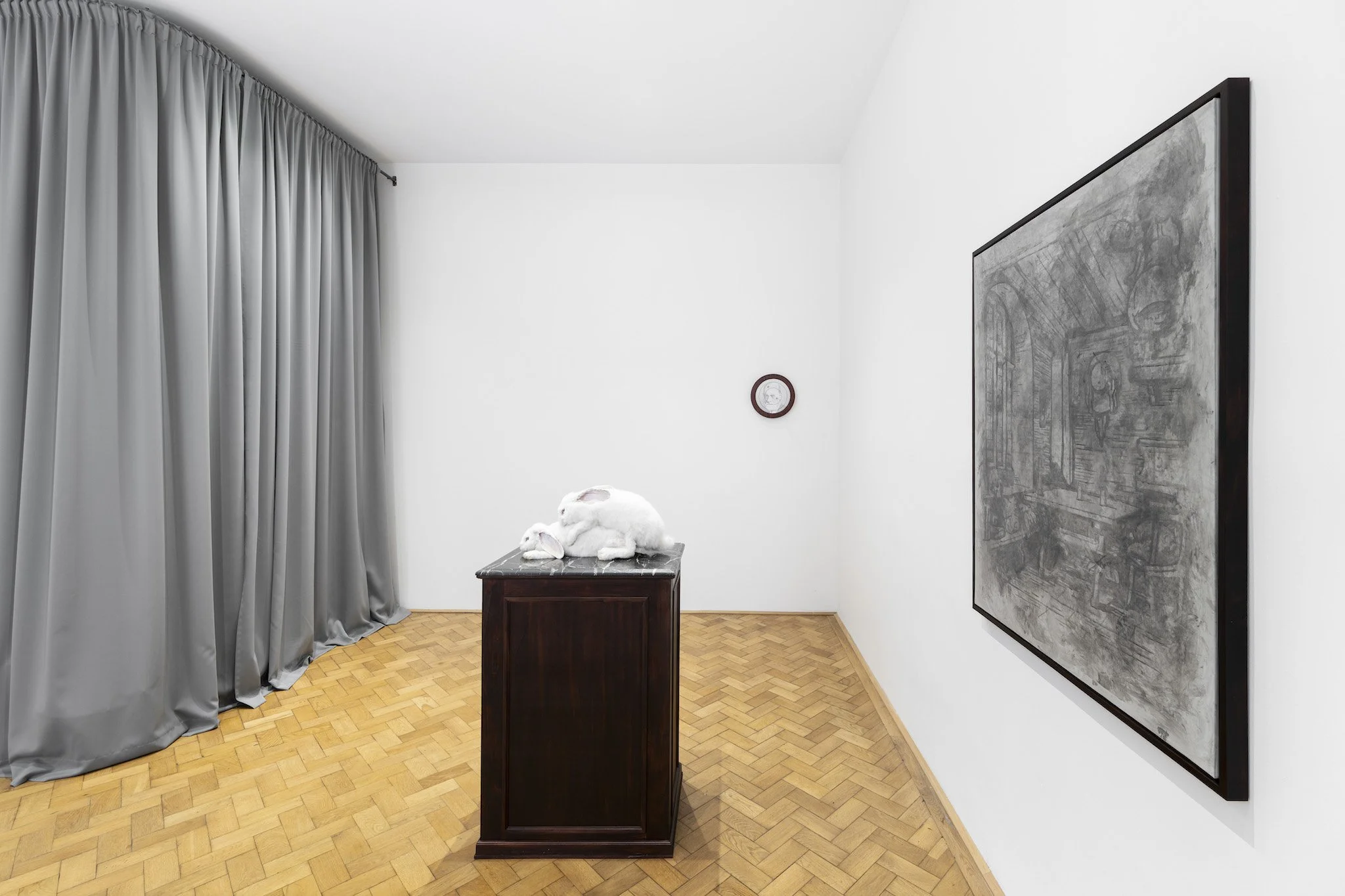
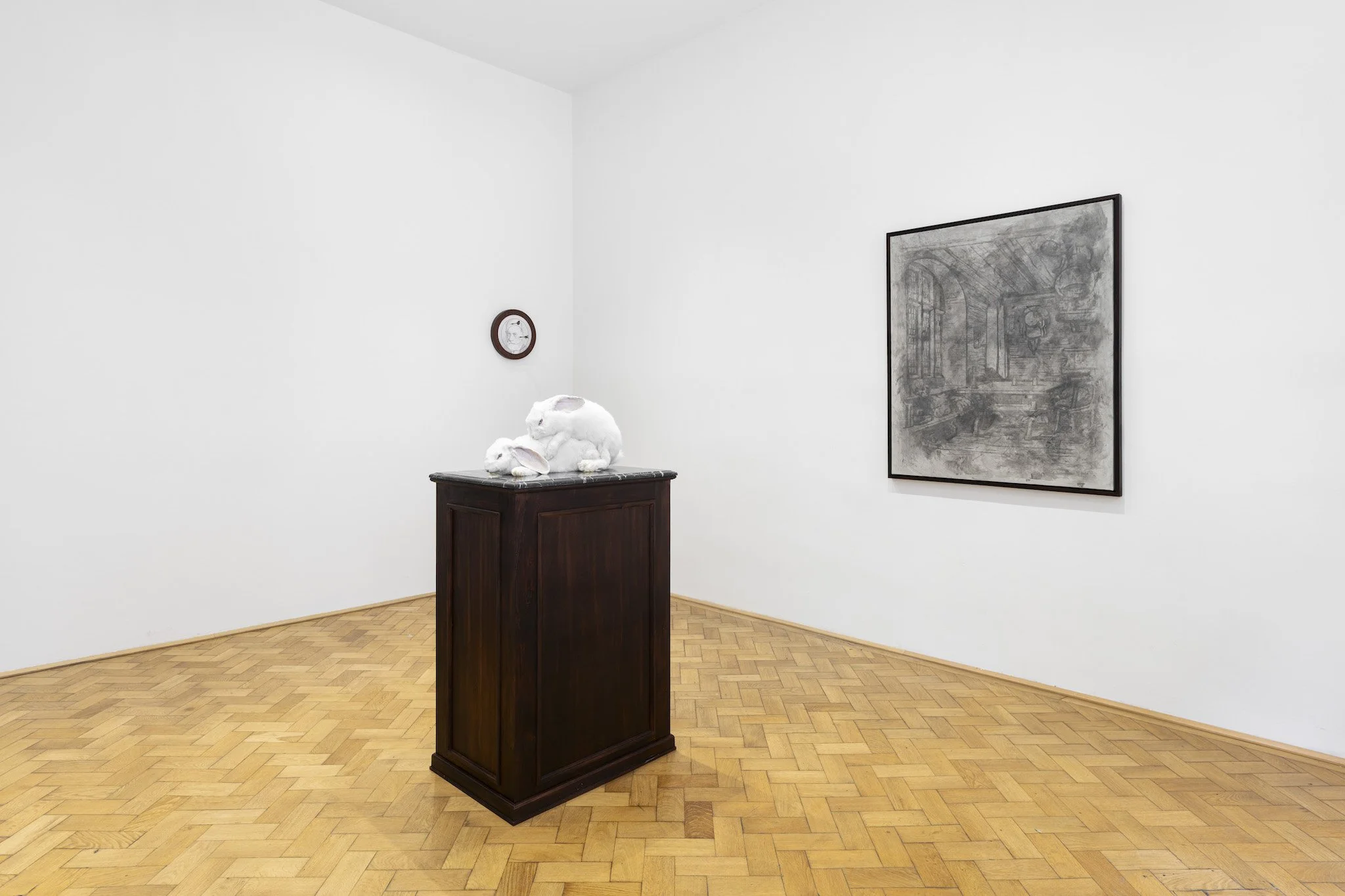
Tudor Ciurscu, L’Eterna Urgenza, 120 x 50 x 70 cm

taxidermy, wood, marble, 2026It is at this juncture that Ciurescu’s interest likewise emerges. He assembles a constellation of eerie images drawn from disparate contexts—Eastern Europe and the West, religious iconography, psychoanalysis, and corporate culture. The artist is particularly interested in moments when power becomes undisciplined—when it exceeds or overstimulates itself, losing its direct authority while remaining embodied. This dynamic is evident in the disturbing work L’Eterna Urgenza (2026), a sculpture depicting two rabbits in the act of copulation, staging a scene of animal obscenity and profanation within a space that is at once theatrical, scientific, and mundane.
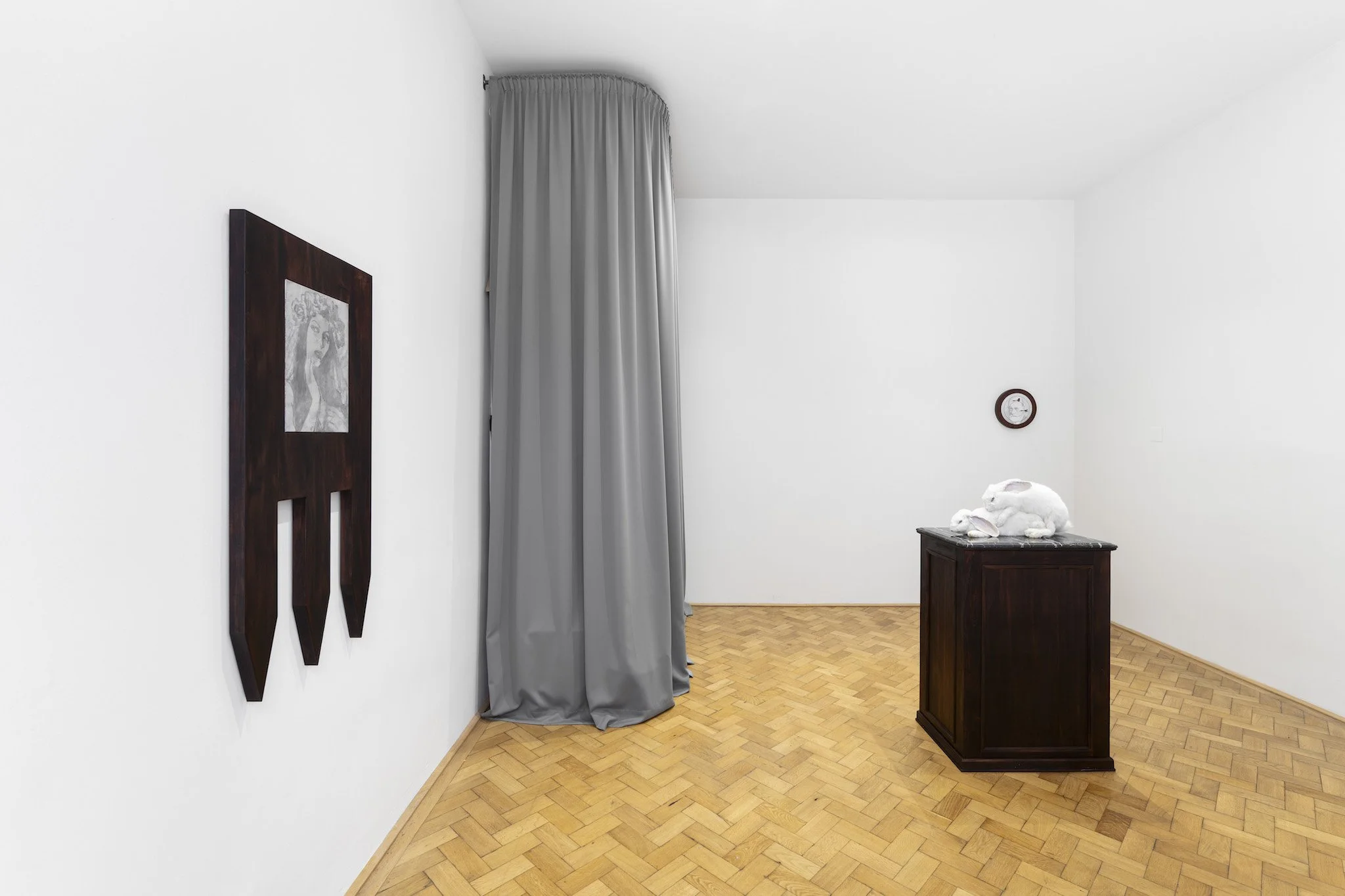
The Prapor / Vera Renczi (2026) introduces the image of Vera Renczi–a Romanian woman believed to have killed around thirty-five men in the 1920s by poisoning them with arsenic. Her husband and lovers all vanished within months or weeks after becoming romantically involved with her. It is believed, she took pleasure in sitting in her basement surrounded by the coffins of her former lovers. Her portrait, rendered in acrylic on linen, is framed within a Romanian Orthodox prapor—a religious form used in liturgical processions. By subverting this religious format through a controversial narrative, Ciurescu foregrounds neurosis and mania as symptomatic forces of society. The body of work presented at ELEGIA is set within wooden frames and pedestals made of dark brown wood, evoking a bourgeois coldness: a space of impenetrability and sexuality grounded in the private sphere. These materials frame controversial images and objects, generating tensions between coldness and exposure, power and liberation, the sacred and the profane, the static and the dynamic.
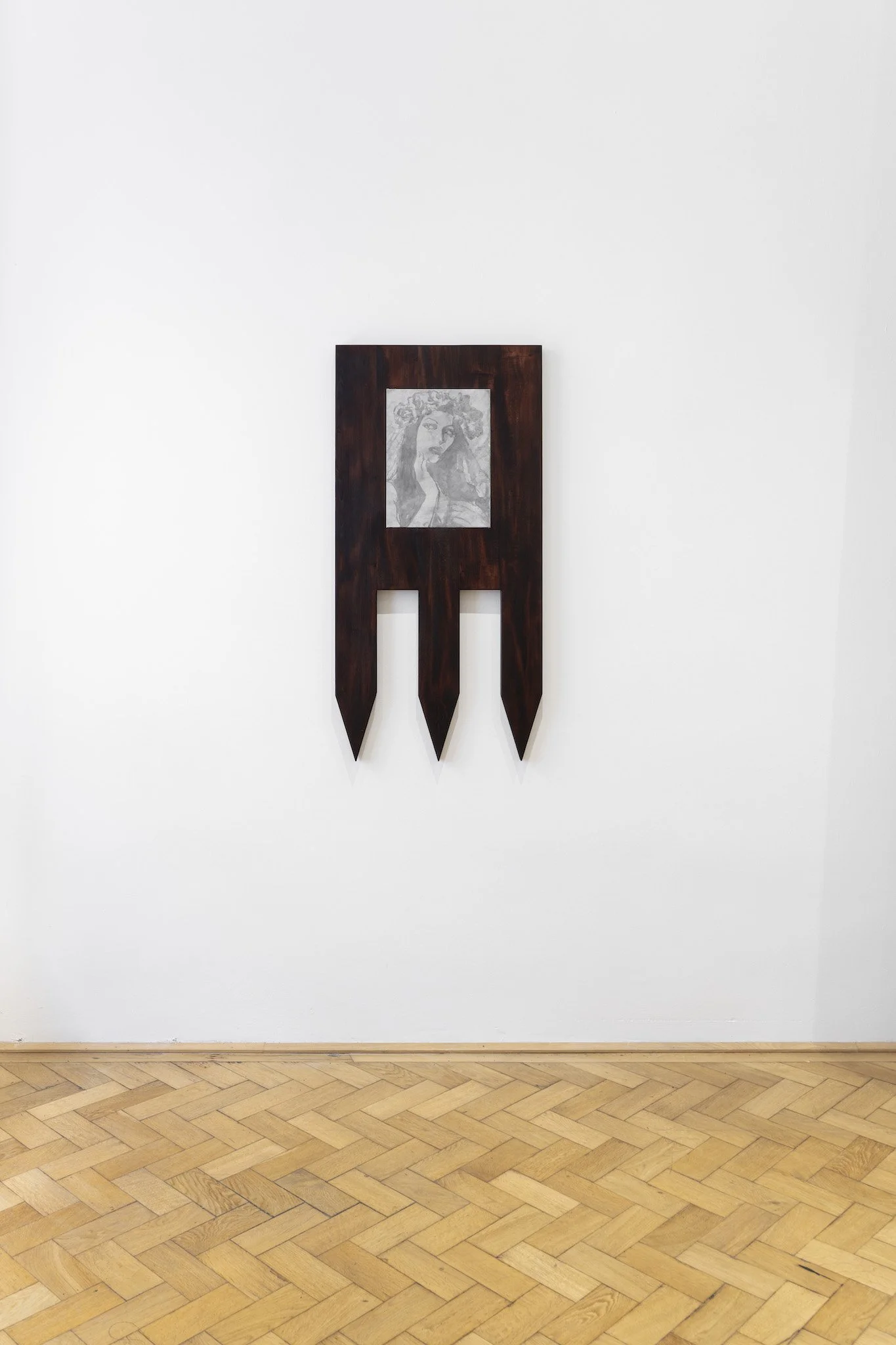
Tudor Ciurscu, Vera Renczi Prapor , 120 x 60 x 4 cm

acrylic on linen, wood, 2026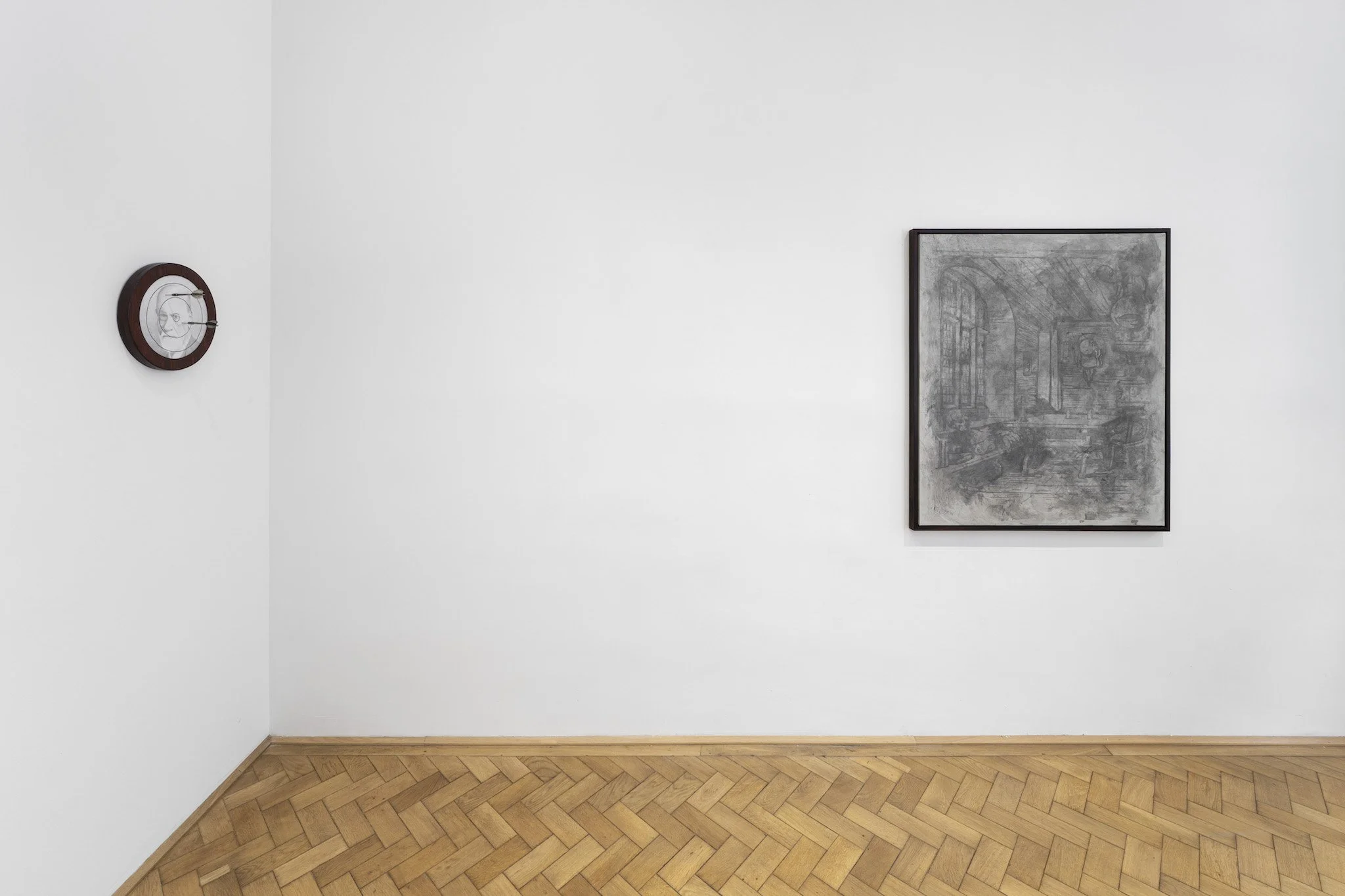
Tudor Ciurscu, Sfantul Ieronim A Plecat - Saint Jeronim Has Left

125 x 105 cm
, acrylic on linen, wooden frame, 2026These images speak to the ways in which desire and the death drive operate in a society devoid of emancipatory projects, where fascism proliferates and male fantasies of domination take root. Subjects once considered stable centers of the world begin to disappear—as in Albrecht Dürer’s woodcut Saint Jerome in His Study (1514), which, in Ciurescu’s interpretation Sfântul Ieronim a Plecat (Saint Jerome Has Left) (2026), is rendered without its central figure. The stable subject is thus eroded, as labor, research, and discipline recede.
While not included in the exhibition, this work nonetheless functions as a key point of reference—a navigational device within Ciurescu’s practice. Elegia Capensis—a flower that gives the exhibition its title, and which appears in the work of the same name—features a silver-coated 3D scan of the plant, framed within a wooden panel.This work highlights the artist’s strategy: neither iconoclasm nor affirmation, but rather a wandering through the dark forest of the internet, with its crooked algorithmic terrains and digital gardens. The assemblage of images and references forms a magnetic f ield that both attracts and repels, producing a melancholic resignation without stable ground. It resonates with a moment in which fascism proliferates and emancipation dissipates, while offering a disorienting map of these sombre sex-pol forests. Its walls are indeed lined with portraits of Freud and Reich—punctured or fading—where desire appears unsettled and entangled.
Inquire about available works